We recently finished a CPT for a 14-story residential tower near the Inner Harbor in Baltimore. The site had 30 feet of soft estuarine clay overlying sand and gravel—classic Baltimore geology. A standard borehole would have missed the subtle layering. With the cone penetration test we got a continuous profile of tip resistance and sleeve friction every 2.5 cm, identifying a buried channel that could have caused differential settlement. Before designing deep foundations we recommend combining CPT with a resistivity survey to map groundwater chemistry and hidden obstructions. That combo saved the developer weeks of rework.
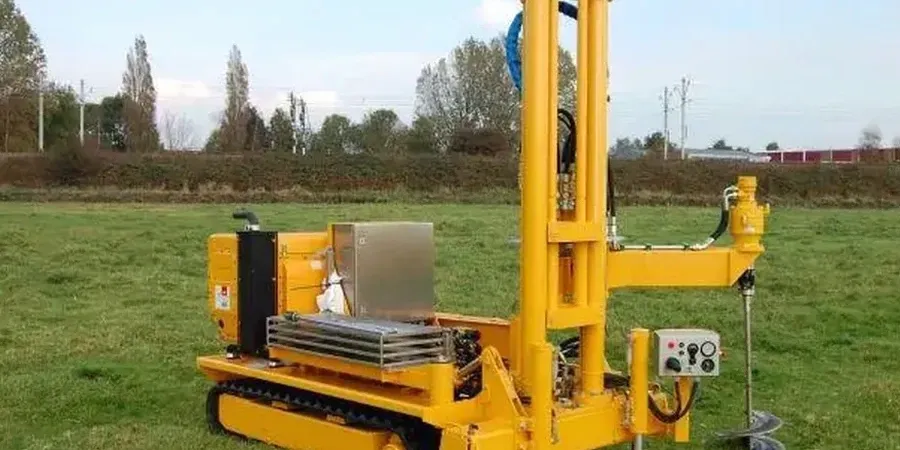
A continuous CPT profile with pore pressure readings can identify buried channels and soft layers that standard borings routinely miss in Baltimore's estuarine deposits.
Method and coverage
Regional considerations
Baltimore's coastal location means high groundwater and soft soils near the harbor. A CPT run without proper pore pressure dissipation tests can overestimate undrained shear strength in clay. We always pause at key depths for dissipation readings to confirm in-situ permeability. Another common issue is gravel layers that deflect the cone tip—we pair CPT with a georradar survey to map coarse zones in advance. The team also watches for buried utilities and old foundations along the Jones Falls corridor. We document every refusal point and adjust the test plan accordingly. Missing these risks leads to under-designed foundations or unexpected excavation costs.
Standards that apply
ASTM D5778-20 – Standard Test Method for Electronic Friction Cone and Piezocone Penetration Testing of Soils, ASTM D6067-17 – Standard Practice for Using the Electronic Piezocone Penetrometer for Environmental Site Characterization, IBC 2021 (International Building Code) – Chapter 18, Soils and Foundations
Related services
Standard Piezocone (CPTu)
Full electric cone with pore pressure sensor for soft soils and environmental work. Real-time data streaming, dissipation tests at selected depths, and soil behavior type classification (Robertson 1990). Ideal for harbor redevelopment sites.
Seismic CPT (SCPTu)
Adds a down-hole geophone to measure shear wave velocity (Vs) at 1-meter intervals. Used for site response analysis and liquefaction assessment per ASCE 7-22. Particularly valuable in the sandy profiles near Fort McHenry.
Typical parameters
Common questions
How deep can a CPT push in Baltimore soils?
In the soft estuarine deposits near the harbor we regularly push to 40–50 meters (130–165 ft). In the Piedmont zone north of the Fall Line we often hit refusal on weathered rock at 8–15 meters. We always pre-survey the site to select the right cone and push truck.
What does a CPT cost for a typical Baltimore project?
For a standard piezocone test with dissipation readings you can expect between US$150 and US$270 per test point. The final rate depends on depth, site access, and number of points. We provide a fixed price after a quick site visit.
How do CPT results compare to SPT borings for foundation design in Baltimore?
CPT gives continuous profiles with higher resolution than SPT, which samples every 1.5 meters. We often correlate CPT tip resistance to SPT N-values using Robertson & Campanella (1983) for local IBC bearing capacity calculations. For liquefaction evaluation we prefer the CPT-based method by Robertson & Wride (1998) because it uses continuous data.