Foundations are the critical interface between a structure and the ground beneath it, and in Baltimore, their importance cannot be overstated. This category encompasses the full spectrum of geotechnical and structural design services required to transfer building loads safely to competent soil or rock, accounting for the region's complex and often challenging subsurface conditions. From historical row houses in Federal Hill to modern high-rises along the Inner Harbor, every project demands a foundation system tailored to site-specific stratigraphy, groundwater levels, and loading requirements. A robust foundation design not only prevents structural distress but also mitigates risks like differential settlement, which can lead to costly repairs and safety hazards. For property owners and developers, engaging specialized expertise—including differential settlement analysis and bearing capacity analysis—is the first step toward a durable, code-compliant building.
Baltimore's geology presents a unique set of challenges that directly influence foundation selection and performance. The city straddles the Atlantic Coastal Plain and the Piedmont Plateau, resulting in a highly variable subsurface profile. Much of the downtown area and surrounding neighborhoods are underlain by thick deposits of soft, compressible clays, silts, and historic fill, often accompanied by a shallow water table. These conditions are notorious for causing excessive settlement and poor bearing capacity, making lightweight or shallow foundations risky without thorough investigation. In some areas, residual soils derived from weathered crystalline bedrock can exhibit collapsible behavior when wetted, a hazard addressed through specialized collapsible soil evaluation. Conversely, the presence of competent schist and gneiss at depth provides excellent end-bearing strata for deep foundations, though the transition zones demand careful design to avoid abrupt stiffness contrasts. Understanding these local conditions is not optional; it is fundamental to any successful project.
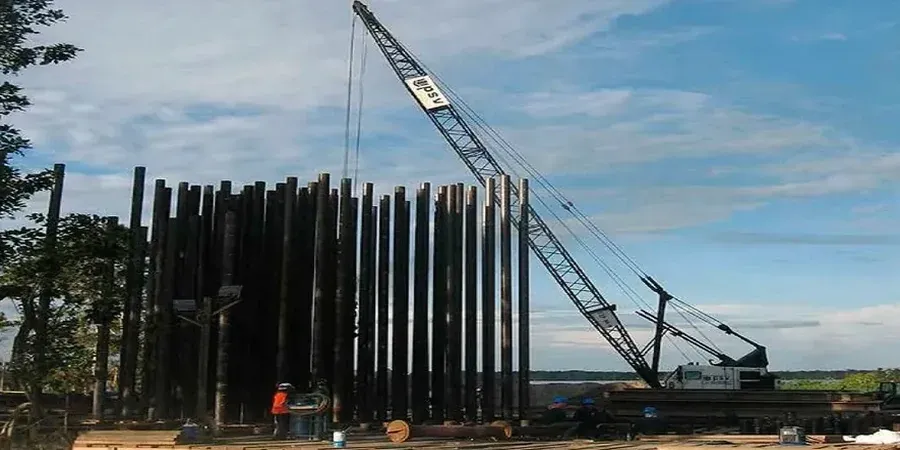
Regulatory compliance in Baltimore is governed by the Maryland Building Performance Standards, which adopt and amend the International Building Code (IBC) with state-specific provisions. Chapter 18 of the IBC, regulating soils and foundations, is enforced alongside the Baltimore City Building Code, which mandates geotechnical investigations for most new construction and substantial renovations. These codes prescribe minimum factors of safety for bearing capacity and allowable settlement limits, often requiring a licensed professional engineer to seal all foundation plans. For deep foundations, the International Association of Foundation Drilling (ADSC) specifications are frequently referenced, particularly for driven piles and micropiles. Additionally, projects within the Chesapeake Bay Critical Area or floodplains must adhere to environmental regulations that influence foundation type and elevation. A comprehensive pile foundation design must integrate these structural codes with geotechnical parameters, ensuring both safety and permit approval from city authorities.
The types of projects requiring these services in Baltimore are remarkably diverse. Urban infill developments on narrow lots often rely on micropile design to install foundations with minimal vibration and overhead clearance, protecting adjacent historic structures. Large-scale waterfront redevelopments, such as those in Harbor Point or Port Covington, frequently employ raft or mat foundations to spread loads across variable fill soils, a solution detailed in our raft/mat foundation design service. Transportation infrastructure, including bridge piers and light rail extensions, demands high-capacity driven piles analyzed for both skin friction and end bearing components. Even residential additions in neighborhoods like Canton or Roland Park can trigger the need for a differential settlement analysis when tying into existing foundations on dissimilar soils. Whether it is a temporary construction crane pad or a permanent high-rise, the foundation must be conceived as an integrated system, balancing structural demands with geotechnical realities. Our approach combines field exploration, laboratory testing, and advanced numerical modeling to deliver foundation solutions that are both efficient and resilient, safeguarding Baltimore's built environment for decades to come.
Available services
Differential settlement analysis
→ Ver detalleBearing capacity analysis
→ Ver detallePile foundation design
→ Ver detalleRaft/mat foundation design
→ Ver detalleMicropile design
→ Ver detalleDriven pile design
→ Ver detalleCollapsible soil evaluation
→ Ver detallePile skin friction vs. end bearing analysis
→ Ver detalleCommon questions
What are the most common foundation problems encountered in Baltimore?
The most prevalent issues stem from the city's variable geology, including excessive settlement on soft clays and uncontrolled fill, bearing capacity failures in loose saturated sands, and distress caused by expansive or collapsible soils. Historic foundations often suffer from deterioration and inadequate depth, while newer construction on adjacent sites can undermine existing structures if not properly underpinned. High groundwater levels complicate excavation and require robust dewatering and waterproofing strategies.
When is a deep foundation required instead of a shallow footing?
A deep foundation becomes necessary when competent bearing strata are too deep for economical shallow footings, or when surface soils are prone to excessive settlement, liquefaction, or scour. Projects with heavy column loads, uplift forces, or lateral demands—common in mid- and high-rise buildings, bridge piers, and retaining walls—also typically require deep systems like driven piles, drilled shafts, or micropiles to transfer loads to bedrock or dense glacial deposits.
What geotechnical investigation is needed before designing a foundation in Baltimore?
A thorough investigation per IBC and local code typically includes soil borings, cone penetration tests, and test pits to define stratigraphy, strength, and groundwater conditions. Laboratory testing for consolidation, shear strength, and chemical analysis is critical, especially in areas with historic fill or industrial contamination. The scope must be sufficient to evaluate bearing capacity, settlement, and lateral earth pressures, with a minimum of one boring per 2,500 square feet of building footprint for most structures.
How do local building codes influence foundation design choices?
Baltimore's adoption of the IBC with Maryland amendments imposes strict criteria for allowable settlement, load combinations, and construction oversight. Foundations must be designed by a licensed engineer and withstand prescribed wind and seismic loads. Special inspections are mandatory for deep foundations, including pile driving logs and integrity testing. Environmental codes may also restrict certain foundation types in floodplains or near the Chesapeake Bay Critical Area, favoring elevated or deep systems over conventional spread footings.