Baltimore sits on a complex geological boundary where the Atlantic Coastal Plain meets the Piedmont Plateau, a transition that creates highly variable subgrade conditions within a single block. In the southern and eastern districts, you find deep deposits of loose sands and soft clays associated with the Patapsco River floodplain and former marshlands, while toward the north and west, residual soils from weathered schist and gneiss dominate. This sharp lateral variability means two adjacent building columns can experience completely different compression rates under the same load. A reliable differential settlement analysis in Baltimore must account for this abrupt change in soil stiffness, often requiring a combination of borings and In-Situ like the cone penetration test to capture the stratigraphic transitions at high resolution.
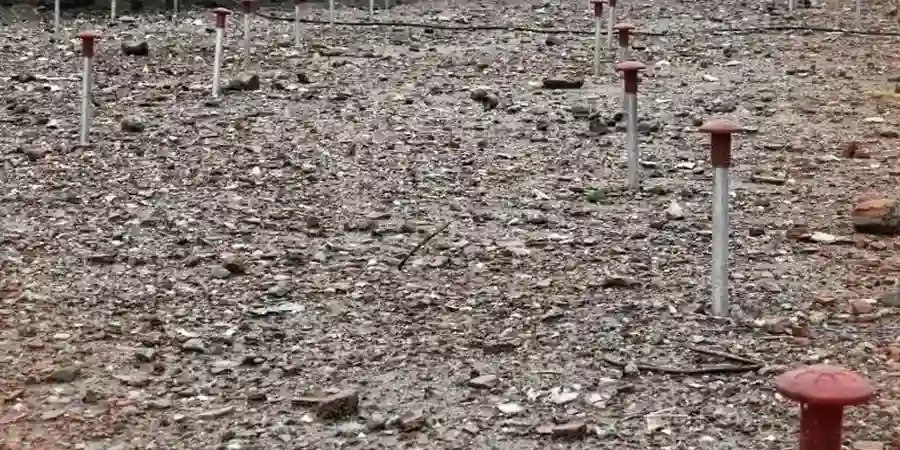
Two adjacent columns can settle at radically different rates across the Coastal Plain-Piedmont boundary, making single-point consolidation tests insufficient for Baltimore foundations.
Method and coverage
Regional considerations
Baltimore's 18th- and 19th-century urban expansion filled natural tidal creeks and marshes with whatever debris was available—brick rubble, ship ballast, and foundry slag—creating undocumented fill layers that are notoriously compressible. The Jones Falls valley, now buried under much of downtown, is a prime example where uncontrolled fill up to 6 meters thick sits above soft estuarine deposits. When redevelopment projects in Harbor East or Locust Point ignore this legacy of uncontrolled fill, differential settlement in Baltimore often manifests as stair-step cracks in masonry facades and jammed elevator shafts. A thorough analysis must identify these historical fill zones and model their long-term creep behavior under new loads.
Standards that apply
ASCE 7-22 (minimum design loads, settlement criteria), IBC 2021 (Chapter 18, foundation performance), ASTM D1586-18 (SPT for settlement parameters)
Related services
Consolidation Testing (ASTM D2435)
One-dimensional oedometer tests on undisturbed samples to determine preconsolidation pressure, compression index, and coefficient of consolidation for each soil layer.
Plate Load Testing (ASTM D1194)
In-situ bearing and settlement modulus tests at footing depth to validate design assumptions and capture the actual stiffness of residual soils or compacted fill.
Instrumented Monitoring
Installation of settlement plates, inclinometers, and piezometers to track differential movement during and after construction, with monthly reporting to the design team.
Typical parameters
Common questions
What is the main cause of differential settlement in Baltimore?
The most frequent cause is the abrupt lateral change from stiff Piedmont residual soils to soft Coastal Plain estuarine deposits or undocumented historic fill, often within the same building footprint.
How many borings are needed for a differential settlement analysis on a typical Baltimore rowhouse?
For a standard 20-foot-wide rowhouse, we recommend at least three borings: one at each end and one mid-span. For larger footprints, one boring per 500 square feet is a conservative starting point.
What settlement criteria does the IBC require for Baltimore buildings?
IBC 2021 Table 1806.1 limits total settlement to 25 mm on sand and 50 mm on clay, with differential settlement not exceeding 1/300 of the span between columns for most structures.
How much does a differential settlement analysis cost in Baltimore?
For a typical residential project, expect a range between US$750 and US$1,850 depending on the number of borings, laboratory tests required, and depth of exploration needed to reach competent bearing strata.