ASTM D1586 governs the Standard Penetration Test (SPT), and in Baltimore this standard is particularly relevant given the city's complex geology. The region transitions from Piedmont residual soils in the north to Coastal Plain sediments near the harbor. We have completed dozens of SPT borings across these zones, from Fells Point to Druid Hill Park. The N-values we recover directly inform foundation design per IBC 2021 and ASCE 7. Before any deep foundation or slope analysis, we typically recommend combining SPT with a masw vs30 survey to refine the site class. The test is efficient and delivers immediate stratigraphic profiles.
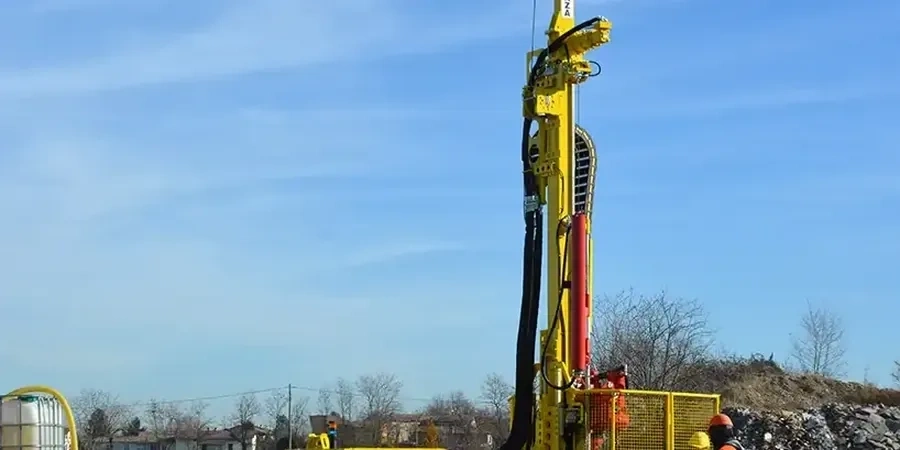
In Baltimore's variable geology, uncorrected SPT N-values can mislead design. Correlating with CPT and Vs30 surveys prevents under- or over-design by up to 25%.
Method and coverage
Regional considerations
The SPT equipment itself—tripod, cathead, hammer, rods, and split-spoon—is solid but demands experienced operators. In Baltimore's tight urban sites, like rowhouse alleyways in Canton, we use a portable CME 45 rig. The main risk is underestimating fines content in the clay-rich Piedmont soils. If fines are above 15%, a simple SPT without correction for fines can overestimate liquefaction resistance. That is why we always run complementary fines determination and, when needed, a liquefaction assessment using the Youd-Idriss 2001 method. Proper boring backfill and grouting are also mandatory to prevent groundwater migration pathways.
Standards that apply
ASTM D1586-18 Standard Test Method for SPT and Split-Barrel Sampling, IBC 2021 Chapter 18 (Soils and Foundations), ASCE 7-22 Minimum Design Loads (Site Classification), Youd & Idriss (2001) Liquefaction Resistance Criteria
Related services
Standard SPT Boring & Sampling
Full-depth borings with 2-inch split-spoon sampling at 5-foot intervals. Continuous core in rock if encountered. Includes field logs and N-value reporting per ASTM D1586.
Energy Calibration & Correction
Hammer energy ratio measurement using strain gauges. Correction to N60 and (N1)60 for liquefaction and bearing capacity analysis. Essential for IBC site class determination.
Integrated Geotechnical Package
SPT combined with laboratory index tests (Atterberg limits, grain size) and in-situ permeability. Delivers a complete subsurface profile for foundation design in Baltimore's mixed geology.
Typical parameters
Common questions
How is the SPT different from a CPT in Baltimore soils?
SPT provides actual soil samples for visual classification and lab testing, while CPT gives a continuous strength log without retrieval. In Baltimore's gravelly Piedmont soils, SPT is more reliable; in soft coastal sediments near the harbor, CPT complements SPT for detailed layering.
What is the typical cost range for an SPT boring in Baltimore?
For a standard 30-foot boring with SPT sampling every 5 feet, the range is between US$600 and US$700 per boring. Deep borings or those requiring rock coring can increase the cost. We provide a firm quote after reviewing the site access and depth requirements.
How deep should SPT borings go for a 4-story building in Baltimore?
We recommend borings extending to at least 1.5 times the foundation width, or until competent bearing strata (N > 50 blows/ft) is encountered. For a typical 4-story structure with shallow footings, 30 to 40 feet is usually sufficient, but deeper borings may be needed if soft layers persist.
Do I need a separate SPT for liquefaction analysis in Baltimore?
The same SPT boring can be used for liquefaction assessment if you collect fines content on representative samples. We recommend at least 3 SPT borings per site to capture variability. The N-values corrected for fines and overburden are then input into the Seed-Idriss or Youd-Idriss method.