Geotechnical investigation in Baltimore is a critical first step for any construction or infrastructure project, providing essential data about the subsurface conditions that directly influence design, safety, and long-term performance. This category encompasses a range of field and laboratory testing methods used to characterize soil, rock, and groundwater. In a city with a complex geological history and dense urban fabric, understanding what lies beneath the surface is not just a regulatory requirement but a fundamental engineering necessity. A thorough investigation identifies potential hazards such as unstable soils, shallow bedrock, or high groundwater, allowing engineers to develop appropriate foundation solutions and earthwork strategies.
Baltimore's geology is famously diverse, shaped by its position along the Fall Line where the Atlantic Coastal Plain meets the Piedmont Plateau. This transition creates highly variable conditions across short distances. In the downtown area and Inner Harbor, you often encounter thick sequences of alluvial sediments, historic fill, and soft organic clays overlying crystalline bedrock. Moving north into the Piedmont, residual soils and weathered rock, known locally as saprolite, dominate the profile, with competent bedrock like the Baltimore Gneiss at depth. This geological complexity makes a one-size-fits-all approach to investigation impossible, demanding a tailored scope that often combines multiple testing methods to accurately profile the transition from soil to rock.
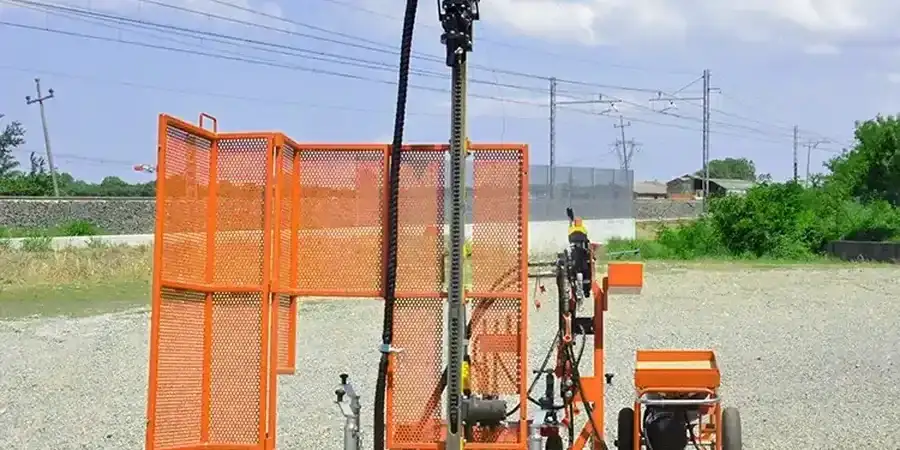
Adhering to national and local standards is mandatory for all investigation work in the city. The primary governing document is the Baltimore City Building Code, which adopts and amends the International Building Code (IBC). Chapter 18 of the IBC mandates that all geotechnical investigations conform to ASTM International standards. For subsurface exploration, this means strict adherence to procedures like the Standard Penetration Test (SPT) per ASTM D1586 for soil sampling and relative density assessment. Similarly, in-situ testing such as the Cone Penetration Test (CPT) must follow ASTM D5778, providing continuous high-resolution data on soil stratigraphy, which is particularly valuable in the soft soils prevalent in the harbor area.
The need for a comprehensive investigation spans a wide array of project types in Baltimore. High-rise developments in the central business district require deep borings to characterize bedrock for deep foundation support. Infrastructure projects, like the rehabilitation of aging sewer and water lines, depend on accurate profiling to avoid encountering unexpected debris or contaminated fill. Renovations and additions to historic row houses in neighborhoods like Federal Hill or Fells Point often need to assess the capacity of existing shallow foundations on variable fill. For large-scale port and industrial facilities, investigations routinely integrate both SPT and CPT data to map liquefiable layers and design stable waterfront structures. Every successful project in Baltimore starts with a clear and accurate picture of the ground, obtained through a rigorous investigation program.
Common questions
What is the purpose of a geotechnical investigation in Baltimore?
A geotechnical investigation identifies the physical and engineering properties of soil, rock, and groundwater at a project site. The purpose is to provide the data needed for safe and economical foundation design, assess geologic hazards like settlement or slope instability, and ensure compliance with the Baltimore City Building Code. It is the foundational step that mitigates risk for any construction project.
How does Baltimore's local geology affect the scope of an investigation?
Baltimore's location on the Fall Line creates a dramatic transition from soft Coastal Plain sediments in the south to hard Piedmont metamorphic rock in the north. An investigation must be specifically designed to profile this variability. A scope of work in the Inner Harbor, with its deep fill and clays, will differ significantly from one in a northern neighborhood where shallow bedrock is common.
What building code governs geotechnical investigations in Baltimore City?
Geotechnical investigations are governed by the Baltimore City Building Code, which is based on the International Building Code (IBC). Chapter 18 of the IBC requires that soil classifications and field testing methods comply with applicable ASTM standards. The local authority having jurisdiction, the Department of Housing and Community Development, enforces these requirements for permit approval.
When is a deep foundation investigation required instead of a shallow one?
A deep foundation investigation, typically involving rock coring, is required when site conditions indicate that shallow footings are not feasible. This is common in Baltimore where thick deposits of soft, compressible clay or uncontrolled fill are present, or when heavy structural loads demand support on competent bedrock. The decision is based on preliminary findings from initial borings and test pits.