Many construction teams in Baltimore assume that all native ground behaves like uniform sedimentary soil. That assumption often leads to foundation cracks, slab heave, or unexpected settlement within the first two years. Baltimore sits on the Piedmont Plateau, where residual soils derived from weathered schist and gneiss can change from competent rock to soft clay in less than a meter. A proper study of soil mechanics is essential to map these transitions. Without it, the bearing capacity assumed in design rarely matches what the excavator finds. We have seen projects where a simple test pit revealed a 2-meter-thick saprolite zone that the geotechnical report had missed entirely. That kind of mismatch can delay a project by weeks.
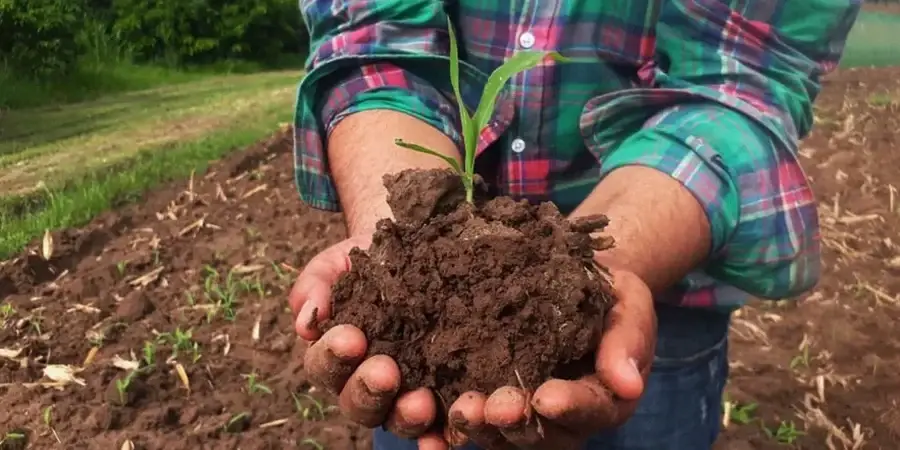
Residual soils in Baltimore can transition from gneiss to silt in less than a meter — skipping characterization means betting on unknowns.
Method and coverage
Regional considerations
Baltimore lies in a moderate seismic zone per IBC 2021, with peak ground acceleration around 0.15g. That alone is not alarming. The real risk comes from the residual soil profile. When saprolite retains the relict structure of the parent rock, it can be mistaken for competent material. Under cyclic loading — even from a moderate earthquake — those same soils can lose strength rapidly. We have documented cases in the northern suburbs where colluvial deposits over weathered schist amplified ground motion by a factor of two. A site-specific response to seismic amplification analysis becomes essential when residual soil thickness exceeds 10 meters. Ignoring this can turn a code-compliant foundation into a liability.
Standards that apply
ASTM D2487 (USCS classification), ASTM D1586 (SPT), IBC 2021 (Seismic site class), ASCE 7-22 (Site coefficients)
Related services
Field Exploration & SPT Coring
Continuous sampling with standard penetration tests every 1.5 meters. We log weathering grade, fracture spacing, and recovery ratio. Suitable for residential lots and commercial pads.
Laboratory Classification & Strength Testing
Afterberg limits, sieve analysis, natural moisture, and direct shear or triaxial tests. Results are delivered with USCS classification and bearing capacity recommendations.
Typical parameters
Common questions
What is the difference between residual and transported soil in Baltimore?
Residual soil forms in place from chemical weathering of the underlying bedrock — mostly Wissahickon schist and Baltimore gneiss. Transported soil, like the coastal plain deposits south of the Fall Line, was moved by water or glaciers. Residual profiles retain relict structure and can be highly variable vertically. Transported soils tend to be more uniform horizontally.
How deep should I drill for residual soil characterization?
For typical residential foundations, we recommend borings to at least 6 meters or until competent rock (weathering grade I or II) is encountered. For commercial structures, depths of 15 to 20 meters are common. The goal is to penetrate the full weathered zone and confirm the bearing stratum.
Can I reuse an old geotechnical report from a neighboring lot?
It is risky. Residual soil profiles can change dramatically within 30 meters due to variations in fracture density, mineral composition, and drainage. A report from a lot 50 meters away may miss a buried channel of soft saprolite. Site-specific characterization is the only reliable approach.
How much does residual soil characterization cost in Baltimore?
A typical investigation for a single-family lot ranges between US$870 and US$3,410 depending on depth, number of borings, and lab testing scope. Larger commercial projects with multiple boreholes and advanced testing will be higher. We provide firm quotes after reviewing the site plan.
What weather conditions affect field testing?
Heavy rain can raise the water table temporarily and soften the upper residual layer, skewing SPT N-values. We avoid drilling during or immediately after significant precipitation. Frozen ground in winter can also make coring difficult. Our crews monitor weather and schedule accordingly.